Destination Guides · Ha Giang, Vietnam
Ha Giang Loop: The Ultimate 4-Day Route
If you want to experience the wild side of Northern Vietnam, the Ha Giang Loop is hard to beat.
· 6 min read
- Duration
- 4 days · 3 nights
- Distance
- ~350–400 km
- Start & finish
- Ha Giang
- Best time
- September – November
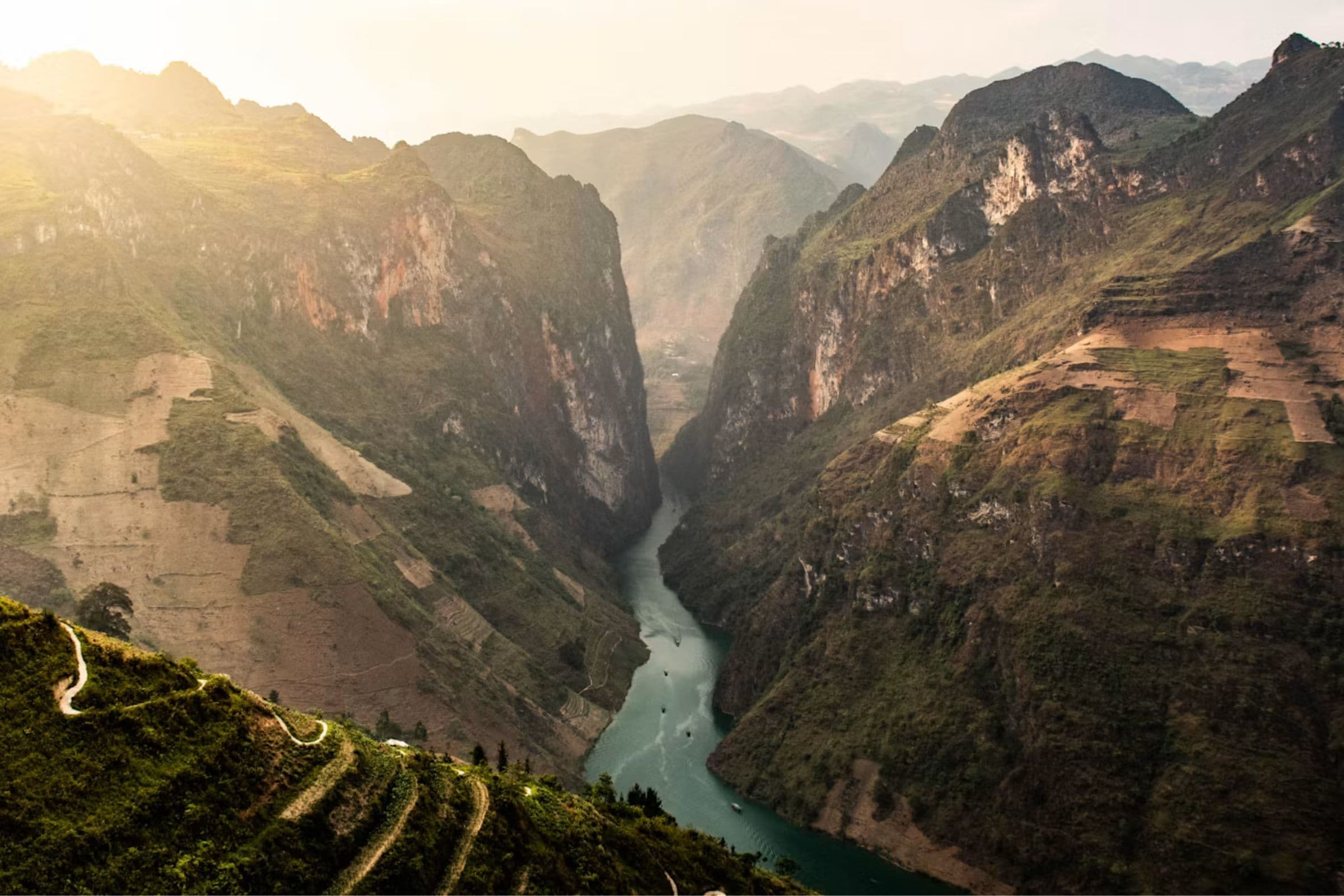
This is not just a road trip. It is a journey through limestone mountains, remote villages, endless mountain passes, hidden valleys and roads that seem to disappear into the clouds.
We recommend 4 days and 3 nights. Three days is possible, but four gives you enough time to actually enjoy the places you ride through instead of spending the entire trip watching the clock.
When to Go
The best time to ride the Ha Giang Loop is generally September to November.
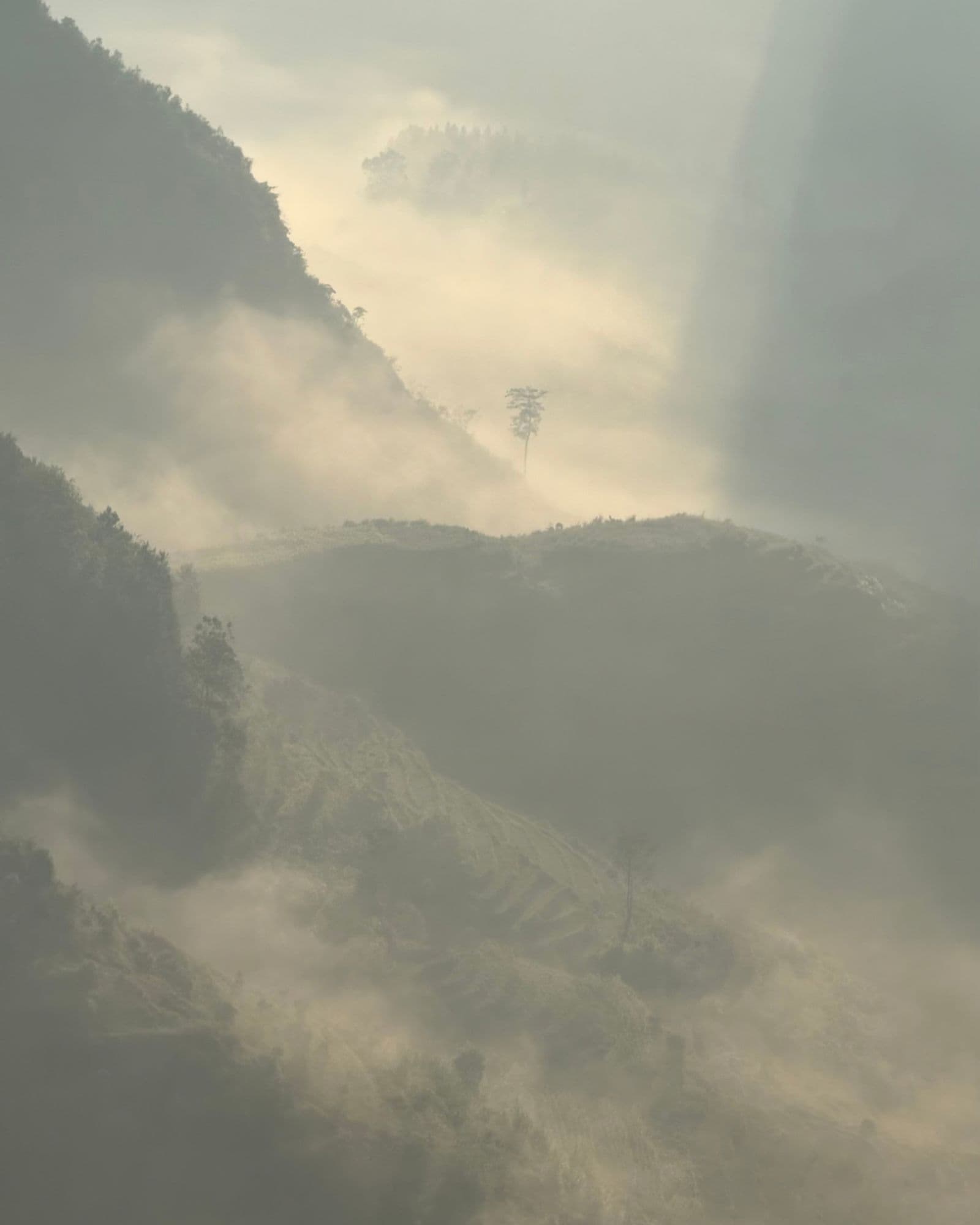
This is when you can expect cooler weather, beautiful mountain landscapes, golden rice fields and, if you’re lucky, one of Ha Giang’s most spectacular sights: a sea of clouds floating between the mountains.
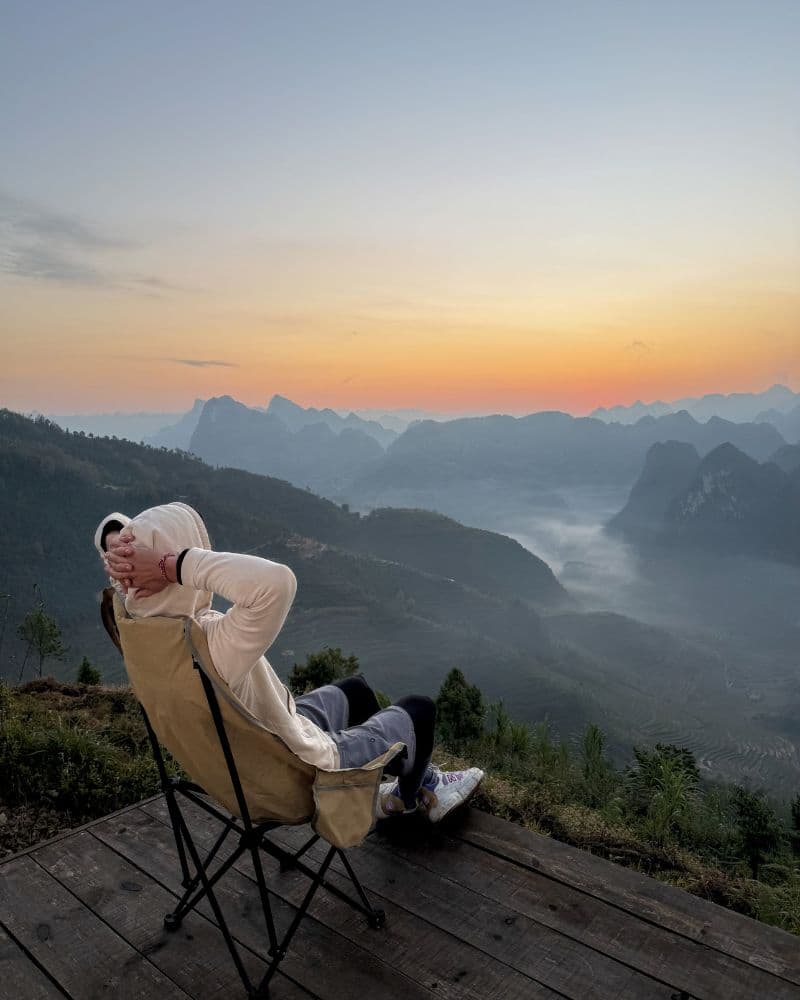
Early mornings are particularly magical. You can climb above the clouds while entire valleys disappear beneath a layer of mist.
Getting to Ha Giang
Ha Giang City is the starting and finishing point of the Loop.
From Hanoi by sleeper bus
The easiest option is an overnight sleeper bus from Hanoi. The journey takes around 6–7 hours, allowing you to leave Hanoi in the evening and arrive in Ha Giang early in the morning.
By car
You can also travel from Hanoi by car if you prefer more flexibility. If you plan to drive yourself, make sure you have the appropriate driving documents before your trip.
What Bike Should You Rent?
There are plenty of motorcycle rental shops in Ha Giang. For the Loop, we recommend something light and comfortable rather than a large or powerful motorcycle.
- Honda XR or a similar mountain bike — great if you are an experienced rider and want more confidence on mountain roads.
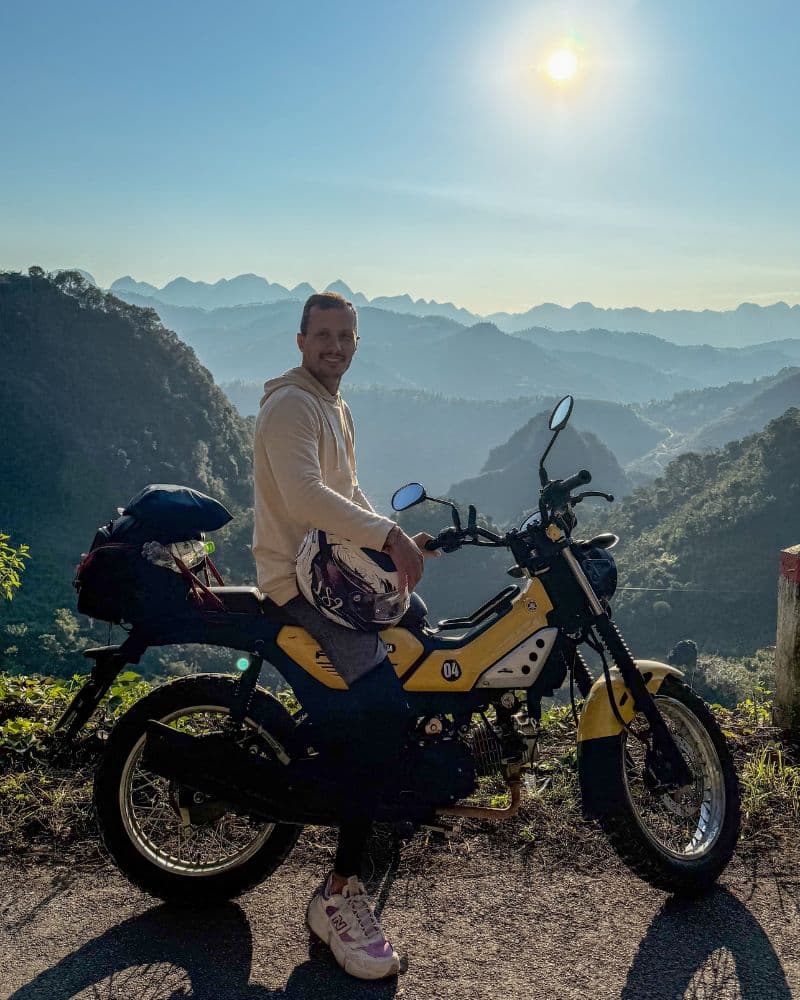
- Yamaha PG-1 — a fantastic all-round option for the Ha Giang Loop: light, comfortable and capable on both paved and rough mountain roads.
The most important thing is to choose a bike you are comfortable riding for several hours a day.
Day 1
Ha Giang → Lung Cu
~150–170 km · Full day
Start early.
Your first day takes you deep into the mountains, passing through Quan Ba, Yen Minh and Dong Van before continuing towards Lung Cu.

The road itself is the highlight. The further north you go, the more dramatic the landscape becomes. This is a long riding day, but the reward is arriving in one of the most remote and spectacular parts of the Loop.
Day 2
Lung Cu → Dong Van → Ma Pi Leng
~80–100 km · 4–6 hours of riding + stops
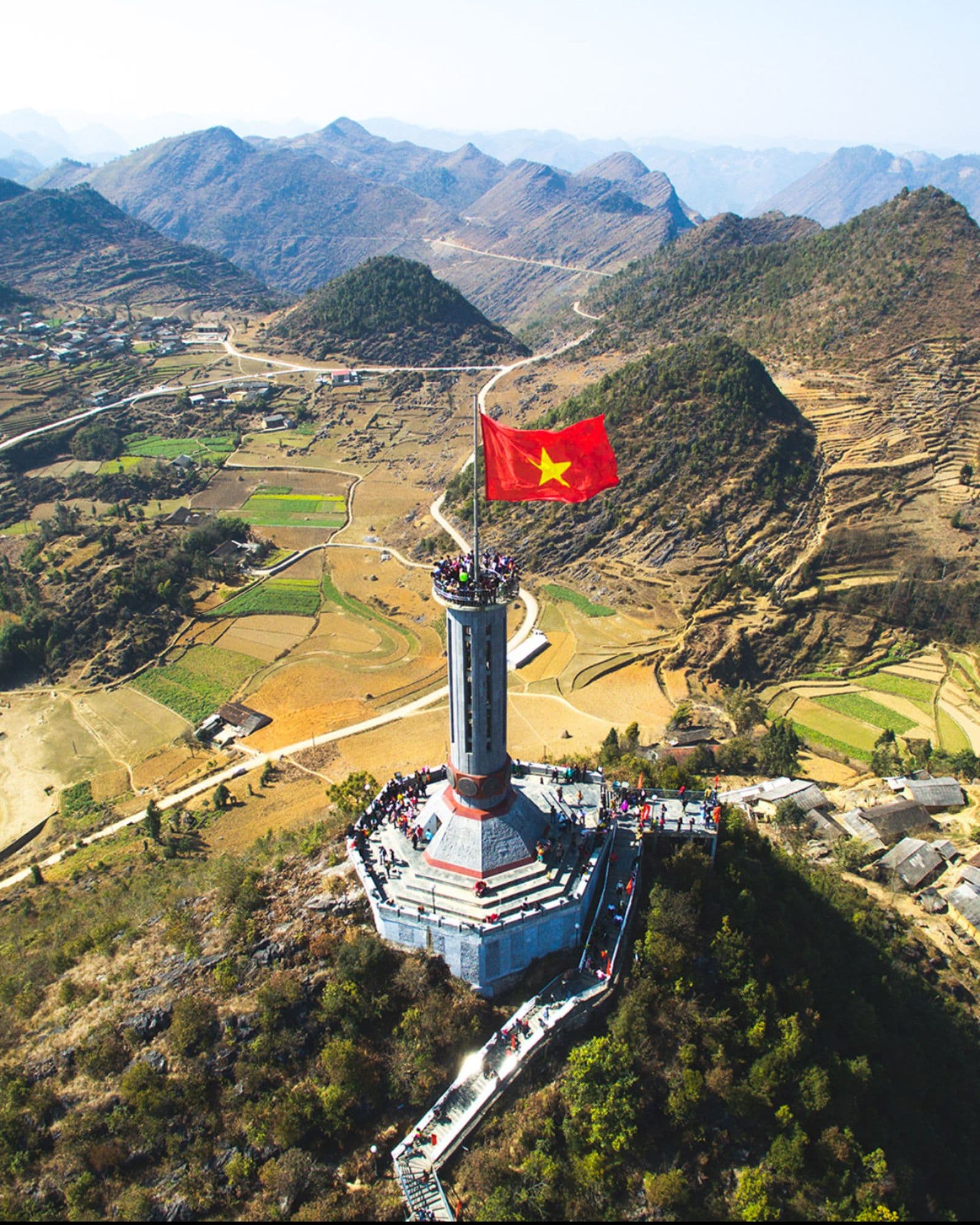
Start the morning with a visit to Lung Cu Flag Tower, one of the most iconic landmarks in northern Vietnam, located close to the Chinese border.
From here, ride back towards Dong Van and continue towards the legendary Ma Pi Leng Pass. This is where the Ha Giang Loop starts feeling truly spectacular.

Ma Pi Leng Pass
Ma Pi Leng is the signature section of the entire Loop.
The road follows the dramatic mountainside above the Nho Que River, with enormous limestone cliffs rising around the valley.
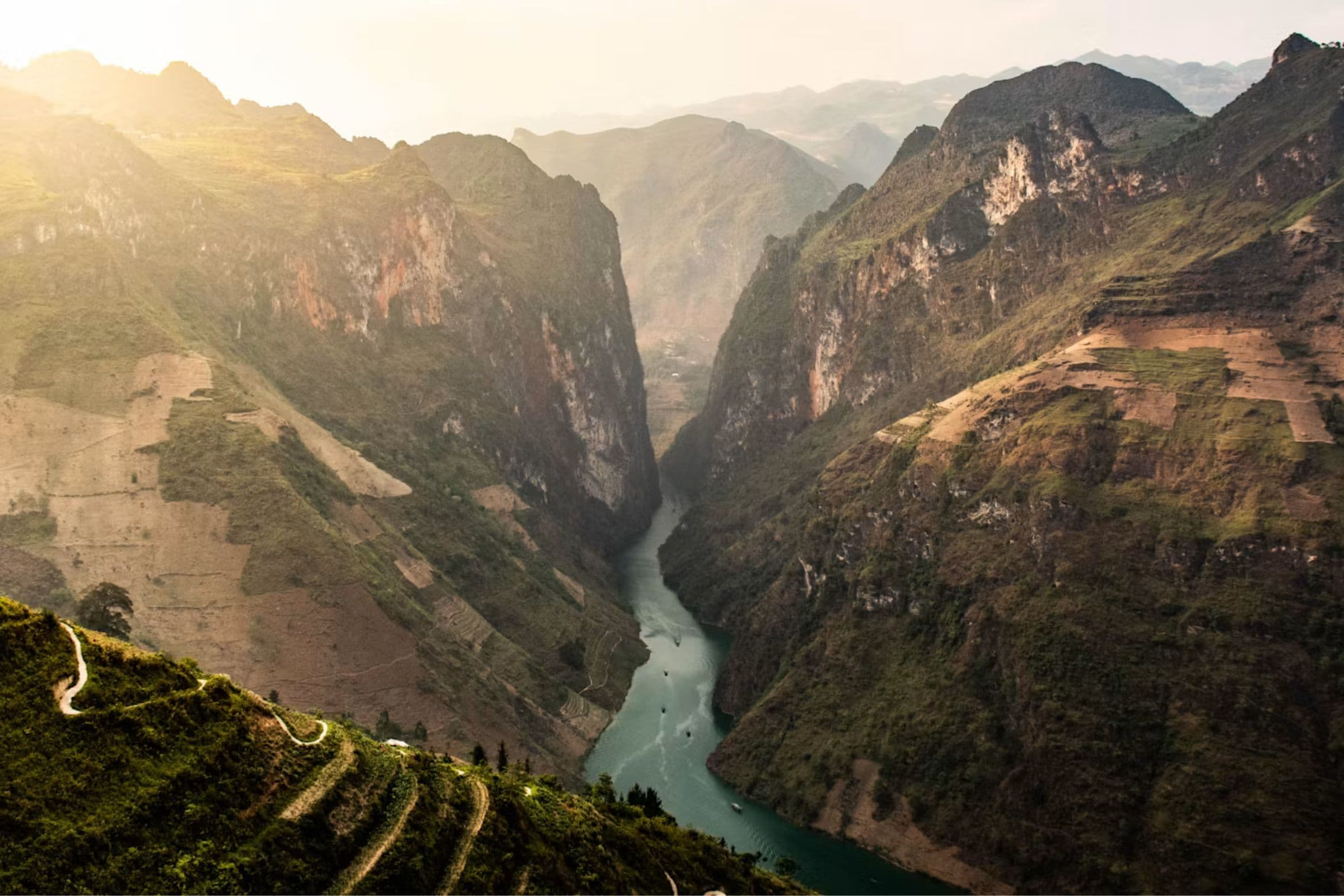
Don’t rush this section. Stop often. Turn off the engine. Walk to the viewpoints. Take it in.
Day 3
Nho Que River → Mí Pó Coffee → Du Gia
~90–120 km · 5–6 hours of riding + activities
This is one of our favourite days of the entire Loop.
Start with the Nho Que River
Instead of immediately getting back on the bike, spend the morning going down to the Nho Que River.
Small boats take you into Tu San Canyon, where enormous limestone walls rise on both sides of the emerald-green river. The boat trip usually takes around 45–60 minutes, depending on the operator and conditions.
It is a completely different perspective on Ma Pi Leng — yesterday you were looking down at the river from the mountains; today you are looking up at those same mountains from the water.
Coffee with a view
After the river, head up to Coffee Mí Pó. This is one of those places you might easily miss if you simply follow the main route.
The café sits high above the canyon and offers incredible views over Ma Pi Leng, the mountains and the Nho Que River. Order a Vietnamese coffee, sit outside and take your time.

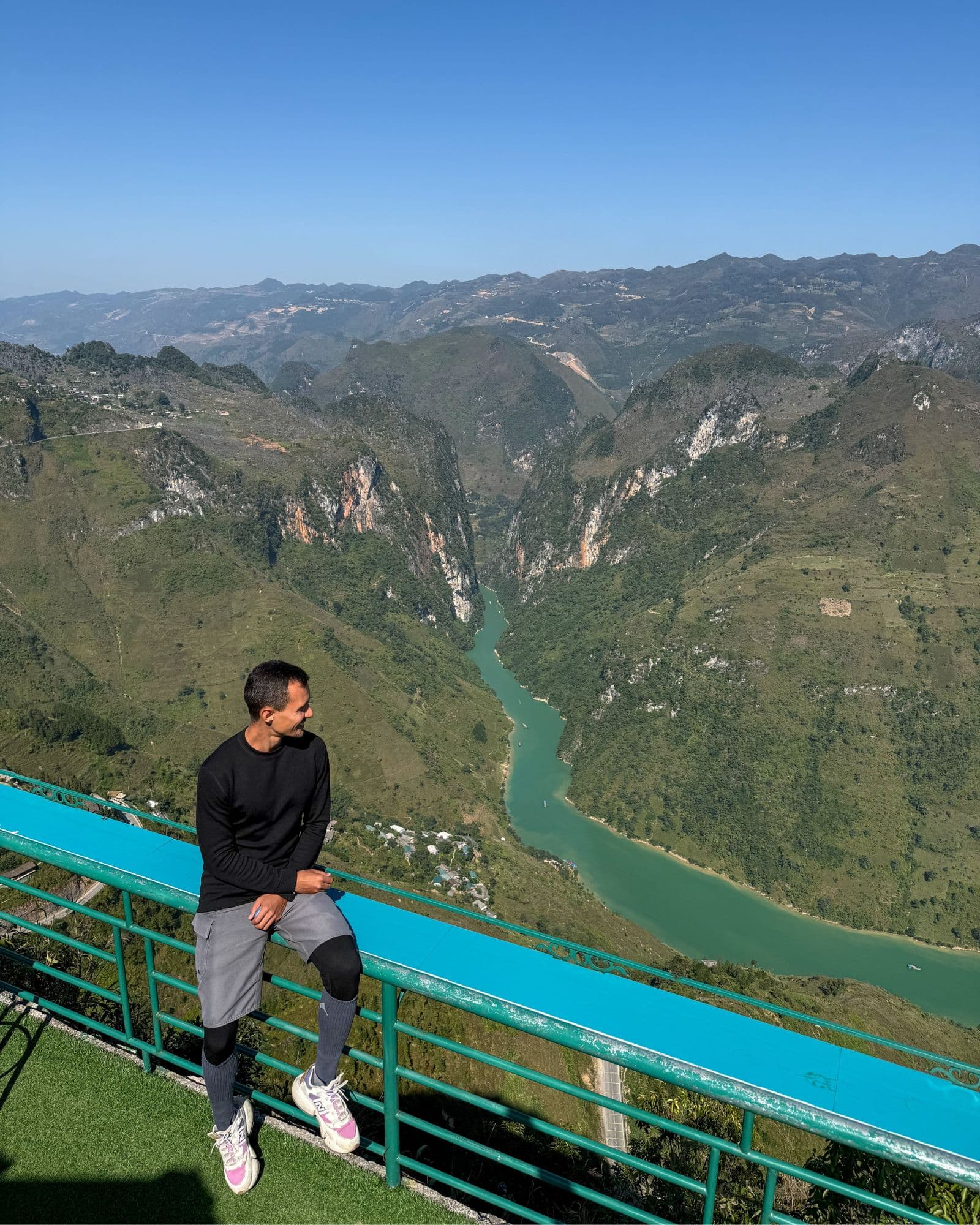
This is exactly the kind of stop that makes the Ha Giang Loop special.
Continue to Du Gia
After lunch, continue south towards Meo Vac and then on to Du Gia. The landscape gradually changes: the dramatic limestone peaks give way to greener valleys, smaller villages and rice fields.
Day 4
Du Gia → Ha Giang
~70 km · 2.5–3 hours of riding

The final day is deliberately easy. Enjoy a slow breakfast in Du Gia before heading back towards Ha Giang.
The road takes you through green valleys and mountain villages before eventually bringing you back to where the journey began. Return your bike in Ha Giang and, if you’re heading back to Hanoi, take an afternoon or evening bus.
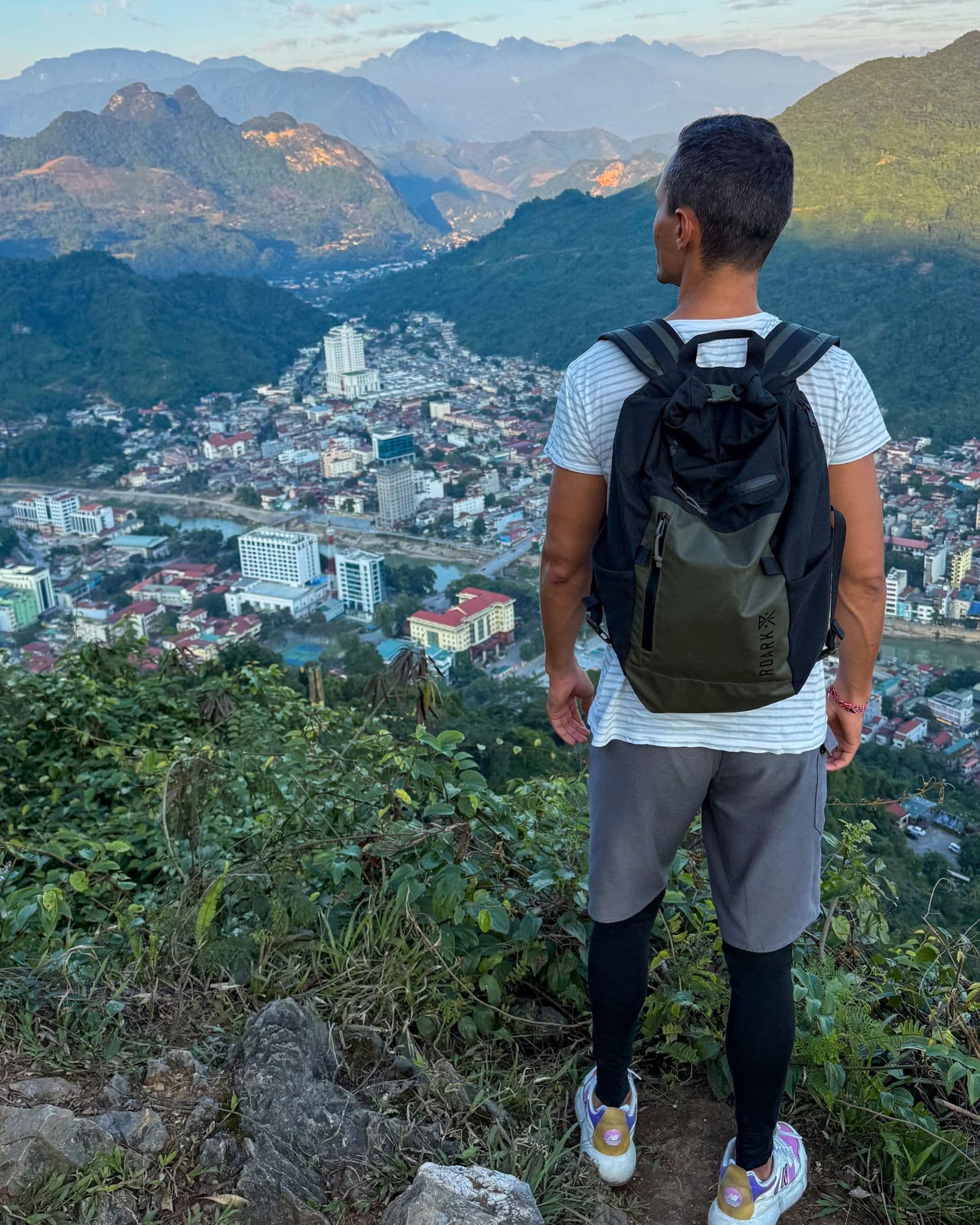
Along the Loop




Should You Ride It Yourself?
If you’re an experienced motorcycle rider — absolutely.
The Ha Giang Loop is not simply about getting from one destination to another. The riding is the experience.
Being on your own bike means you can stop whenever you want, take a small side road, spend twenty minutes at a viewpoint or simply pull over because the landscape suddenly looks too good to ride past.
If you are not confident riding a motorcycle on mountain roads, an Easy Rider is a safer alternative. You will be sitting behind a local driver, which gives you less freedom — but you can still enjoy the scenery without worrying about navigating steep mountain roads yourself.
Our 4-Day Ha Giang Loop
- Day 1
Ha Giang → Quan Ba → Yen Minh → Dong Van → Lung Cu
Sleep: Sunrise Camping Lung Cu
- Day 2
Lung Cu → Dong Van → Ma Pi Leng Pass
Sleep: Ma Pi Leng Ecolodge
- Day 3
Nho Que River → Mí Pó Coffee → Meo Vac → Du Gia
Sleep: Chien’s Lodge Du Gia
- Day 4
Du Gia → Lung Tam → Ha Giang
The Bottom Line
Four days is the sweet spot.
You get the dramatic mountain roads, the remote villages, the Ma Pi Leng Pass, the Nho Que River, the sea of clouds, and enough time to stop somewhere beautiful without constantly watching the clock.
And that’s exactly how we think the Ha Giang Loop should be experienced: slowly, independently, and with plenty of time to get lost.